Project Form Thank You

Thank you!
We're Always Excited to Learn About New Project Ideas.
One of our account managers will review your form and get back to you right away.
Thank you!
We're Always Excited to Learn About New Project Ideas.
One of our account managers will review your form and get back to you right away.
AT E.A. Dion, we're not just experts at designing and making jewelry. We're also experts on the use of jewelry as a form of recognition and reward. We study the psychology and practices of motivation and recognition with enthusiasm, and are happy to share some of our favorite resources and studies with you here.

Distributors are often asked by their corporate customers about the benefits of recognition and incentive programs. They may be “feel good programs,” but do they offer any real benefit to the company? Below are summaries from a number of independent studies that look at the hard facts and figures behind recognition programs and incentive programs. To view the full study, simply click on the study name in red below each summary.
Recognizing your employees leads to greater employee engagement - and greater engagement leads to greater profitability. A Towers Perrin study of 50 global companies over a one year period showed that companies with high employee engagement had a 19% increase in operating income and almost a 28% growth in earnings per share. Conversely, companies with low levels of engagement saw operating income drop more than 32% and earning per share decline over 11%.
The Cicero Group conducted both qualitative and quantitative research across expansive geographic, industry and age groups. They found a strong correlation between years of service award programs and increased tenure. Numerically their research found:
The International Society for Performance Improvement and The Incentive Research Foundation conducted a “meta-analysis” (study of existing, scientific research) on incentive programs to identify any trends regarding their effectiveness, and the elements that lead to success or failure. They compared research results with current practices by conducting surveys via the internet and telephone of 145 US organizations that use incentive system. Key findings included:
The Society for Human Resource Management (SHRM) conducted a survey focused on the effects of strategic recognition programs. It was sent to over 6000 SHRM members. Results of the survey included:
The study defines a strategic recognition program as one that moves beyond simple appreciation or scattershot recognition practices. A strategic recognition program links each recognition moment directly back to your organization’s core values and strategic objectives, giving those moments more meaning and reinforcing your core values in the minds of your employees. By tying recognition to your business objectives and then measuring and monitoring that activity, you are able to manage your culture and your talent and help shape behavior at all levels of the organization.
Strategic recognition is:
* Tied back to your core values and goals
* Measured, recorded and analyzed
* Universal, consistent and centralized for easy reporting
The Cicero Group conducted qualitative and quantitative research across a breadth of demographic groups. They found that performance recognition drives employee engagement. Using self assessment surveys, some key findings include:
88% of employees from companies that provide strong recognition believe they show drive & determination vs. just 35% from companies providing weak recognition.
82% of employees from companies that provide strong recognition believe they have a connection with their company vs. just 30% from companies providing weak recognition.
79% of employees from companies that provide strong recognition have work relationships (i.e. have good relationships with co-workers and managers) vs. just 31% from companies providing weak recognition.
77% of employees from companies that provide strong recognition believe they have personal standing with their company (i.e. know they uniquely contribute, make a difference, are valued and fit in at their company) vs. just 21% from companies providing weak recognition.
The SITE Foundation and Dr. Scott Jeffrey researched the psychological processes behind employee preferences for incentive awards. They found four processes that influence employees' percetions of incentive awards. They are:
Evaluability - Oddly enough, the more ambiguity in the price of a particular incentive, the more people tend to increase the value beyond the actual. Monetary awards have a known value, but non-monetary incentives are hard to "put a price on" so are actually more highly valued
Separability - Cash bonuses go into people's base salary mental account. Thus the value of the cash bonus as an award for performance "above and beyond" does not stand out.
Justifiability - A salesperson may not go out and buy a particular item, because it is expensive and "frivolous." However, if the award is earned for hard work and employee much "use it or lose it" there iws no need to justify accepting it. Hard work become an attractive way to acquire something that is not justifiable otherwise.
Social Reinforcement - Finally, most people are uncomfortable bragging about cash. However, tangible non-cash incentives are visible and socially acceptable to praise, question or bring up.
Welcome, discerning guest, to our private collection (of old, possibly dusty, links). How you found it, we don't really know, but since you are here we want you to feel welcome! In this internal-use area you will find a selection of exclusive links to special promotions, QR code experiences, and other hidden treasures. Indulge in the pleasure of discovery, but do be mindful that some of these offerings may be limited editions, no longer available. They remain as a testament to the ephemeral nature of luxury and the pursuit of the exceptional.

This is a hidden page of links we use for our landing pages! You probably weren't looking for this :). Click any link in our navigation to find what you're looking for!
Use for such and such ad in June 2020
Test
Using Plugin Product TAG Insertion
Link Here
Link Here
Running in LinkedIn, 2020-August
Link
Project Form
Newsletter Sign Up
Landing Page
Landing Page
Move this to the main menu once it is approved.
Landing Page
Landing Page
Landing page for distributor survey 2021-3
New Home Design Options
We need some copy here to talk about our distributor network, why we work with distributors, the benefits distributors bring to the experience, etc. etc.
2019 was another successful year for Dion, due to the continued support of all of our amazing distributor partners. Those that rose to the very top this year were awarded our annual Dion Top Distributor award. These companies include:
Every year, the market is more competitive. So we invest in being better each day,enhancing the viability of custom jewelry in the promotional and recognition markets. We look forward to responding to your future needs with the best in design, manufacturing and administration - as we continue to build our businesses together.
Congratulations to our Top Distributors of 2019 and thank you to all of our many distributor partners. Here's to an even better 2020!
E. A. Dion is the largest independent custom design jewelry manufacturer in the US and is considered by many as the leader in creative jewelry design and innovative jewelry applications. Over the past 50+ years, we have proved adept at innovating solutions for companies that want to inspire and engage their workforce. All of our products are made from the finest materials using a combination of old world craftsmanship and modern production techniques. Whether it's 1 or 10,000 pieces, we capably transform the most detailed graphics and logos into one of a kind corporate or awards jewelry.
When products are originally quoted, the product price is based on the current market price for pure Gold and Silver per ounce. Our quotes reference that current market price, even though we never manufacture with Pure (24K) gold or Silver (.999).
Also on the quote is a "Price Adjustment Factor" (PAF). This Factor is used to adjust our quoted prices to the Gold and Silver markets as they fluctuates up & down. The PAF for each product is determined by combination of the material types (10K, 14K, etc.) and by the weight of materials needed to produce the product.
Although the easily found "current market price" is closely related to the price we use for updating the product cost, there is usually a slight premium depending on the type of fabricated raw material that is needed. Cast products require "Casting Grain", Struck products require "Strips" of varying thicknesses, etc. Our gold supplier adds the price of fabrication to our cost, so the exact cost of the product is affected by this.
Many Distributors think that we pay the prices that they may see online, or on TV, but nobody can actually get tangible, physical gold or silver for those prices. In order to have real gold or silver in your hand, there are always additional costs added to the "Market Price" for fabrication, delivery, etc. Most Distributors call us to ask what their exact cost is when it is time to reorder.
In a die struck piece, dies are made for both sides of the design. The metal is then inserted between the dies and the design is "double stamped" simultaneously onto both sides of the metal. The die striking process “presses” and “pushes” the metal out and up to create the raised and recessed areas of the design.
Cast products are produced from melted metal which is produced from grain stock. Once the metal is cooled, the items are removed, polished, cleaned and completed. This process is well suited for items which have intricate designs, high detail and a requirement for fine smooth surface quality and 2 or 3 dimensional accuracy (realism).
If you want your company’s image in a crisp, clean emblem design die striking may yield the best results. If you need more intricacy and dimension, casting your product may be preferable.
Dion’s jewelry is manufactured in our home office facility in Attleboro, Massachusetts. Dion’s sourcing group (Dion Global) supplies imported products for projects as needed.
No. We don't sell to end-users. We create programs of jewelry - not individual jewelry items - so we work through a distributor network.
All of E. A. Dion’s products are 100% compliant with Proposition 65 adult jewelry requirements. We have chosen to extend our leadership position by providing, at distributor cost, three (3) verifiable Proposition 65 compliant product testing options.
Yes, E. A. Dion is fully compliant with the regulations mandated by Section 102 (Mandatory Third Party Testing for Certain Children's Products)
Yes. We understand each organization is unique and we cater to the individual needs of each client. To assist you in developing your program, our design team will create photo-realistic illustrations of your ideas, and add some of our own, in order to help you visualize the final product. Contact your Account Manager regarding artwork charges.
Pre-production samples are available only upon request. Contact your Account Manager about cost and scheduling.
All dies/tooling/molds and materials necessary for the manufacturing of products are the property of E. A. Dion, and are guaranteed to remain available for your exclusive and continued use unless conditional use arrangements have been made at time of order. E. A. Dion further guarantees the working condition of dies/tooling/molds made by E. A. Dion as long as they remain on our premises.
For repair or replacement as described within the warranty, a Returned Merchandise Authorization (RMA) number is required. Packages arriving at Dion without an RMA # may be refused and returned. Please contact your Dion Account Manager for assistance.
Production time of an initial order with new tooling is approximately six weeks; re-orders are shipped in approximately three to four weeks. Contact your Account Manager regarding specific delivery commitments.
When required we will strive to deliver rush orders in less than the normal production times. Contact your Dion Account Manager with your request.
Standard shipping is United Parcel Service (UPS) or Federal Express (Fed Ex) unless otherwise specified. For special rush deadline delivery dates, we reserve the right to select the method of shipment necessary.
Bulk shipment to a location or drop shipments to individuals or locations are available. Consolidated Shipments (single location, departmental packing) and coordinated shipments (multiple locations receive product simultaneously) are advanced methodologies required for special circumstances.
All shipments are FOB, Attleboro, MA.
We currently ship to over 45 countries. We do not ship to Russia due to their restrictions on all imported jewelry.
Dion offers a full range of packaging options ranging from the least expensive plastic poly-bag to individualized wooden or metal presentations.
All Dion products are warranted for life to be free of manufacturing defects or they will be repaired or replaced at no cost excluding damage as a result of normal wear and tear or abuse.
Dion has created three non-branded themed direct mail pieces; Safety Program Jewelry, Upgradable Award Rings, and Trip Charms and Lapel Pins. Also available are Sell Sheets for our easily customizable standard lines.
Contact your Account Manager to discuss your project. If you have not worked with us before and have not been assigned an Account Manager one will be assigned when you call.
Your Account Manager will discuss with you the next steps including requirements and timing as well as provide recommendations for your project. It may be helpful to explore this website for examples of products that may suit your needs.
Contact your Dion Account Manager for additional product assortment ideas.
For the uninitiated, jewelry terms can be a bit confusing, and the number of options available to you can be dizzying. We've prepared this jewelry primer for you to make everything a bit clearer. Of course, we're also happy to answer any questions you have, so don't worry! Just ask.

Gold is durable, sturdy, and dependable. To get a lifetime of enjoyment from your jewelry:
There is no mystery to caring for your fine silver jewelry. Just follow these tips:
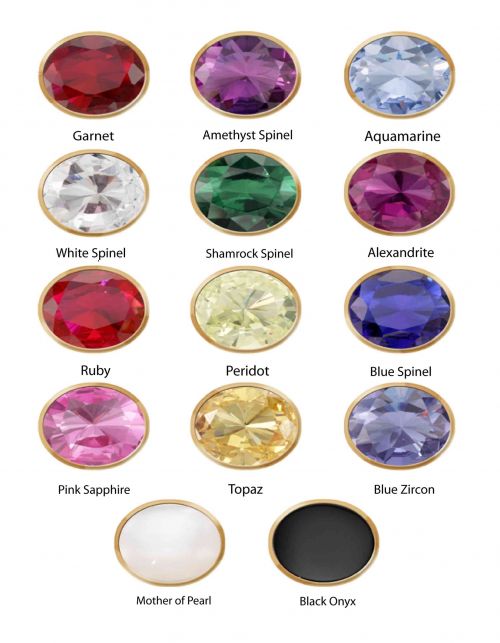
Colored gemstones can be categorized in two primary ways – Genuine and Synthetic.
Genuine - Genuine gemstones are natural gems brought to us courtesy of nature with no interference from humans. Genuine gemstones vary in color and color intensity from stone to stone. They also have different hardness ratings, which require special attention when wearing or cleaning a piece of jewelry. The Gemological Institute of America has developed a colored gem grading system similar to the well-known Diamond grading system.
Synthetic - A synthetic gemstone shares a genuine stone’s physical, chemical, and optical qualities. However, they are created in a laboratory-type setting. All synthetic gems have a consistent color and color intensity and generally have a higher hardness rating than genuine gemstones.
The most often used synthetic gemstones are oval and/or cushion antique (think of a rectangle with rounded corners) in shape. The gemstones may have a buff top (smooth) or faceted top and, more often than not, are one of the recognized “birthstone” colors.
Alloy – A mixture of two or more metals created to enhance the strength and/or appearance of a particular metal.
Antique Finish – An item is dipped into a chemical treatment and then hand buffed to create a look of aged metal, whether it be gold antique, bronze antique, silver antique, or copper antique.
Avantus – E.A. Dion’s response for a high-value, non-plated “yellow” jewelry offering with a less demanding price point than Karat Gold Products. Avantus is an optimum mix of the most recognized “noble” metals in the world – Gold, Platinum (Palladium), and Silver. The gold-led, precious metal alloy delivers a pleasing “Champagne” hue.
Baguette-Cut – A stone cut into a small rectangular or tapered shape with a step cut and often used as an accent to larger stones.
Bail – A triangular finding that attaches a pendant to a necklace.
Bangle – A stiff bracelet. Some bangles have a hinge; others are solid and must be slipped over the hand.
Barrel Clasp – Two metal pieces on either end of a necklace or bracelet that screw or click together forming a clasp.
Barrel Plating – Adding a thin layer of gold or silver to the surface of an item by grouping them together in a “rolling barrel” container, which is then dipped into the appropriate plating solutions. This is a faster and more economical plating process than rack plating.
Base / Bezel – the top portion of a ring consisting of lettering and the center base-stone setting area. The outside area around a base-stone is also known as the bezel.
Base Metal – Refers to non-precious metals. Base metals include copper, zinc, tin, and lead.
Base Stone – A shaped, natural, or synthetic-colored stone set in the base/top of the ring.
Bead Setting – A decorative setting in which stones are set evenly with the metal surface and secured by small metal bead-like prongs.
Bezel Setting – Metal is wrapped around the girdle of the stone, making only its crown and table visible. This setting is admired for its protection, security, and its ability to minimize inclusions.
Box Chain – A classic chain with small box-like links.
Box Clasp – A piece of folded metal on one end of a chain or bracelet fits into the opening of a box on the other end and securely fastens the chain or bracelet together.
Brass – An alloy made up of copper and zinc, with other metals in varying lesser amounts. By varying the copper content, several colors can be produced, from a gold tone (high brass) to a copper tone (gilding metal).
Brushed Finish – This finish is made by rubbing a stiff metal brush across the surface of the jewelry, slightly reducing the metal's reflectivity.
Buffed Epoxy – In this process the epoxy overfills the recessed areas so that the entire surface can be buffed down to one smooth surface. Colors can be PMS matched.
Cabochon Cut – A common cut for gemstones that features a smooth, rounded surface rather than faceted.
Carat – Unit of measure of diamonds and gemstones. One carat is equivalent to 200 milligrams. One carat can also be divided into 100 "points." A .75-carat stone is the same as a 75-point or 3/4-carat stone.
Channel Setting – Jewels rest in a metal channel, held only by a slight rim that runs along the edges of the channel. Channel set jewels are usually round or baguette-shaped.
Clarity – The clearness of a gemstone, or the lack of internal flaws. The clarity scale for diamonds runs from FL (flawless, with neither internal nor external flaws), to I3 (having many clearly visible imperfections using only the naked eye). A ten-power loupe is used to examine a diamond for clarity.
Clasp – A fastener that can open and close, attaching two things together.
Claw - A metal prong that holds a stone securely in a setting.
Cloisonné – A vitreous enamel that under extreme temperature is melted onto a piece of jewelry and when it cools it is polished to achieve a glossy, glass-like appearance.
Collet – Formed metal in either a round or square shape and set into a ring base stone for the purpose of holding a smaller stone – usually a diamond set-in-stone.
Crown – The upper part of a gemstone.
Crystal – A high-quality glass containing at least 10% lead oxide. Lead added to the melt produces very clear glass resembling rock crystal. Crystal is colored by adding various metallic oxides to the melt.
Cuff Bracelet –- A stiff, relatively wide bracelet.
Cushion Cut – The stones are shaped like a cushion - they have a squarish shape that is rounded on the edges. These stones usually have facets similar to those of a brilliant-cut stone.
Die – A specialized tool used in manufacturing to cut or shape material using a press. Dies are generally customized to the item they are used to create.
Die Casting – A viable alternative to die striking and rubber mold casting in which pressure injection is used to force a molten zinc aluminum alloy into a die made out of steel. Two halves of a metal die are placed on a clamp inside a die-casting machine. Under a tremendous amount of pressure, the dies are pressed together. The molten metal is then forced into the cavity between the two halves. The die is cooled; the metal solidifies and from one to eight pieces are removed.
Die Striking – The classic method of manufacturing emblems is preferred when an emblem requires finer lines and crisper detail. A paper design is translated into a solid metal die. A flat piece of metal, slightly larger than the emblem itself, is placed in a press and struck one or more times, depending on the depth of the die and the amount of detail. After the first striking, the metal emblem is annealed or re-softened so the material will flow easily into recessed areas of the die upon a second strike. Once all detail is sharp and clear, excess metal is trimmed from the edges and the emblem is ready for finishing.
Electroplating – A process in which one metal is coated with another metal using electricity. In jewelry, inexpensive metals are frequently electroplated with more expensive metals, like gold, copper, rhodium, chromium, or silver. The thickness of the metal coat varies.
Emerald Cut – The stones have a girdle that is rectangular with truncated corners. Emerald cuts are frequently used on emeralds and diamonds.
Enamel – A paint that air dries to a hard usually glossy finish. Most commercially available enamel paints are significantly softer than either vitreous enamel or stoved synthetic resins.
Engraving – The ornamentation of metals by means of small hand-pushed or hammer-driven chisels; differs from carving in that depth is suggested by shaded lines.
Epoxy – A thermosetting polymer formed from the reaction of an epoxide "resin" with polyamine "hardener". Epoxy has a wide range of applications, including fiber-reinforced plastic materials and general-purpose adhesives.
Facet – One of the flat surfaces of a cut stone or glass.
Filigree – Open, lacy, decorative metal work.
Findings – The functional metal parts used in the construction of jewelry - clasps, jump rings, etc.
Finish – Refers to the type of look given to a finished piece using different variations of the plating, polishing, and color-filling techniques.
Fold-Over Clasp – A hinged clasp used on necklaces and bracelets where a piece hinges and clips to closure.
Full Cut – A gemstone with 58 facets.
Gemstone – A mineral, rock, or petrified material that when cut or faceted and polished is collectible or can be used in jewelry.
Girdle – The widest perimeter of a gemstone.
Gold – A soft, yellow, corrosion-resistant element that is the most malleable and ductile metal. Gold in its pure 24K state is very soft. It is alloyed with copper silver and zinc to make it harder and therefore more durable as a jewelry item. The three karat grades we use are 10K, 14K, and 18K. 10K is approximately 41.5% pure gold; 14K is approximately 58.5% gold; and 18K is approximately 75.2% pure gold.
Gold Filled – Made of a hard base metal (often brass) with a bonded layer of karat gold on top. This is an excellent way to obtain a gold precious metal award item without the expense of 10K or 14K gold. 10K or 14K gold sheet is bonded through a soldering process or mechanically bonded through extreme pressures to a base metal substrate. It is rolled repeatedly to obtain the desired thickness and percentage of gold required.
Gold Plated –- Gold layer over base metal less than 1/20th of the total weight of the metal and marked GP.
Hallmark – Mark on the back of jewelry denoting gold or silver content.
Hidden Box Clasp – A necklace or bracelet closure that consists of a flat slip piece that locks into a rectangular box hidden under the last link of the chain.
Incised – Lettering or detail is cut into the ring (below the main surface); on a ribbon top or smooth sides.
Inclusion – A particle of foreign matter contained within a mineral. Inclusions can be solid, liquid, or gaseous.
Jump Ring – A circular metal ring with an opening. It is used to attach two other rings or links and is then often soldered or pressed shut.
Karat – Used to define the amount of pure gold found in a jewelry item.
24 karat (24K) gold is pure gold
18 karat (18K) gold contains 18 parts gold and 6 parts another metal or metals (75.2% gold)
14 karat (14K) gold contains 14 parts gold and 10 parts another metal or metals (58.5% gold)
10 karat (10K) gold contains 10 parts gold and 14 parts another metal or metals (41.5% gold)
Lever Back – An earring closure that consists of a hinged lever that bends and latches behind the ear.
Lobster Claw Clasp – A jewelry fastener that resembles the claw of a lobster. A tiny spring keeps the arm of this clasp closed. It is used to attach two other rings or links to a necklace or bracelet.
Lost Wax Casting – A process of casting metal in which the original model is sculpted in wax. The wax is then enclosed in clay and the wax is melted out, making a hollow mold. The mold is then filled with molten metal. The clay is broken off and the cast metal remains.
Marquise-Cut – A gemstone cut in an oval shape, pointed at both ends creating a boat-shaped design.
Micron – A unit of length equal to 0.001 mm (millimeter).
Moh's Scale – Conceived by German mineralogist, Moh’s, it is the most commonly used scale of relative hardness of minerals. Each mineral of a given hardness scratches all of those with a lower number. The highest number in the Moh's Scale is 10 and only the diamond fits this category of hardness.
Nick Setting – Stones are placed in a row, with metal bordering on either side. In a nick setting, small prongs are nicked from the surrounding metal to secure the stones.
Omega Back – A straight piece of metal (a post) goes through the earlobe while a hinged curved arm supports the back of the earring.
Opulite – E.A. Dion’s response for a “white” precious metal offering with wear properties exceeding Sterling Silver, priced more agreeably than White Gold and does so while maintaining its luxurious white appearance without the need for rhodium plating. The Palladium based alloys’ membership in the Platinum Metals Group (PMG) only adds to the credibility and desirability of the offering. Opulite delivers a platinum family metal, Palladium, with a permanent, un-enhanced, luxurious white appearance combined with greater wear properties such as, tarnish resistance and durability when compared with Sterling Silver. Opulite also compares favorable to white gold economically and for maintaining its brilliant white color over time.
Oxidation – A chemical process in which oxygen atoms bond to atoms of a material (like a metal) and electrons are transferred from the oxidized material to the reduced material. Iron oxidizes when exposed to air and moisture, forming iron oxide (rust). Silver oxidizes (tarnishes, turning the surface black) when it is exposed to hydrogen sulfide in the air.
Palladium – A white precious metal similar to platinum, but weighs and costs must less.
Pavé Setting – A stone setting in which multiple small stones are set close together and very close to the surface of a piece of jewelry, making it look like the jewelry has been paved in gemstones.
Pavilion – The lower part of a cut gemstone, below the girdle.
Pear Shaped Cut – Gemstone cut that resembles a pear or teardrop - rounded on one end and pointed on the other.
Platinum – A heavy silver-white precious metal that is 35X rarer than gold. Platinum is 95% pure with a brilliant luster that does not tarnish. Its purity also makes it hypoallergenic and perfect for sensitive skin or those with jewelry allergies. It is highly pliable and can be shaped into very intricate patterns.
Precious Metal – This metal group is generally defined as referring to platinum, gold and silver, which are valued for their rarity, color, and malleability.
Price Adjustment Factor (PAF) – This Factor is used to adjust the price of Gold and Silver jewelry as the commodity price of an ounce of gold or silver fluctuates up & down. There are three key components used to determine an individual product's PAF. They are Metal Purity, Product Weight and the Market Price of Gold/Silver.
Product Weight –Precious metals are measures in Troy Ounces. A Troy ounce is equivalent to just over one (1) ordinary ounce: 1 Troy ounce = 1.097 ordinary ounces
A Troy ounce is further divided into 20 Pennyweight. Pennyweight is the most common unit of measure for precious metal products
The PAF is used to re-price, up or down, the precious metal content (purity & product weight) of a jewelry product that has had a price change based on the free market price of the commodity.
Princess Cut – A square-cut stone. This fancy cut is also known as a Quadrillion cut.
Prong Setting – Stones held in place by metal claws or prongs.
Rack Plating – A plating process where pieces are hung on a rack individually, then dipped into the appropriate plating solutions. Best for pieces that have hand polished surfaces.
Radiant Cut –- A method of cutting rectangular stones so that they have the sparkle of brilliant cut round stones. The shape is a rectangle with the corners clipped off.
Rhodium – Non-tarnishing white precious metal that resembles platinum. It is often used to plate precious and base metals, giving jewelry a hard, platinum-like sheen.
Rose Gold – Gold of a pinkish color (alloyed with copper).
Sandblast and Polish – Provides a rich, textured look for the background of the item, while the raised detail is hand polished to an exquisite shine.
Satin Finish – This semi-glossy finish is done by making shallow parallel lines on the surface of the metal, reducing its reflectivity.
Screw Back – A highly secure earring fastening similar to a standard post but the back or “nut” actually screws onto the post. Many diamond stud earrings use this secure fastener.
Setting – A jewelry piece or enclosure that holds gem stones in place.
Shank – The part of a ring that encircles the finger.
Spray Lacquer – A very thin layer of color which is sprayed, usually through a cut out stencil, onto parts of the background of an item. This does not fill recessed areas. Can be PMS matched.
Spring Ring Clasp - A common clasp for necklaces and chains made from a circle with a small spring-tension knob that can open a gap in the circle, allowing the circle to hook onto the other end of the chain.
Square Setting – A diamond or gemstone setting with four prongs that hold a stone, usually a square or princess-cut gemstone.
Stainless Steel – Made from steel (iron combined with various other metals) this is then alloyed with chromium. It is virtually immune to rust or corrosion and is a very cost-effective metal. Exceptionally durable; cannot be resized if a ring.
Stamping – Decorating technique where a relief design is achieved by means of die stamping or a mechanical stamping machine.
Step Cut – Generally used for colored stones. This cut is rectangular to square and has many facets parallel to the edges of the stone.
Sterling Silver – A durable jewelry metal consisting of at least 92.5% pure silver and 7.5% alloy.
Table – The large, flat area at the top of a cut gemstone.
Tarnish – Undesirable dulling or discoloration due to the effects of heat, humidity, chemicals or aging on certain precious metals.
Tiffany Setting – A ring with a high, six-pronged solitaire diamond on a simple circular band.
Toggle Clasp – A jewelry fastener in which a bar can be inserted into a ring to fasten a piece of jewelry. It is used to attach the two ends of a necklace or bracelet.
Translucent – Used to describe the effects of light passing through a stone. Translucent stones appear frosted instead of clear or transparent.
Transparent – Used to describe the effects of light passing through a stone. Transparent stones are clear and easy to see through.
Trim Tool – Used for trimming excess material from the edges of a struck emblem.
Vermeil – Sterling silver that has been plated with at least 10K or better gold with an average thickness of 100 mills.
White Gold – Alloy of gold with nickel, palladium or platinum.
Zinc Aluminum – Used in die casting, the industry name is ZAMAC#3. This is an alloy consisting of 95% zinc and 4% aluminum. The aluminum is added to help the flow of metal into the die.
Due to the rise in the precious metals markets over the past few years, some customers have told our distributors that they can no longer afford a karat gold jewelry program. However, they also do not want an award program lacking precious metals, which their employees value. Dion now has a response for our distributors – Avantus and Opulite.
Avantus is Dion’s lower karat response for a high-value, non-plated “yellow” jewelry offering with a less demanding price point. Avantus is an optimum mix of the most recognized “noble” metals – low-percentage gold, platinum, and silver. This low percentage gold led precious metal alloy delivers a pleasing golden color, complementing multiple skin tones, clothing types, and colors as well as being compatible with the other jewelry owned by the wearer.
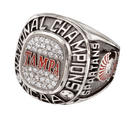
Opulite is also a market driven response for a “white” precious metal jewelry offering with wear properties exceeding sterling silver. However, it is priced more affordably than white gold while maintaining it luxurious white appearance without the need for rhodium plating. Opulite presents customers with a platinum family metal, palladium, with a permanent, un-enhanced, luxurious white appearance combined with greater wear properties such as, tarnish resistance and durability when compared with sterling silver. Opulite compares favorably to white gold economically and for maintaining its brilliant white color over time. Opulite also allows distributors an improved profitability as an upgraded option to sterling, with a less demanding investment option to white gold.
The introduction of Avantus and Opulite extends Dion’s leadership position in the precious metal recognition and promotional products markets by offering distributors a broader spectrum of precious metal price points from which to choose.
Traditionally, necklaces come in six lengths:

Collar (12-13 inches)
The collar necklace lies snugly around the middle of the neck.

Choker (14-16 inches)
The choker falls perfectly around the base of the neck.

Princess (17-19 inches)
This is the most common necklace length, hanging over the collarbones.

Matinee (20-24 inches)
The matinee necklace hangs between the princess and opera lengths.

Opera (28-34 inches)
The opera's impressive length makes it possible to wear as a single, double, or sometimes even triple, strand.

Rope or Lariat (over 45 inches)
Measuring at least 45 inches in length, the ropenecklace has clasps placed in strategic locations around the necklace which will enable you to break it down into multi-strand necklace and bracelet combinations. Lariats are at least 48 inches long, with the ends left unattached for knotting or wrapping around the neck.
|
Bead Chain |
Bismark Chain |
Box Chain |
Cable Chain |
Curb Chain |
Figaro Link Chain |
|
Foxtail Chain |
Herringbone Chain |
Mariner Link Chain |
Mesh Chain |
Omega Chain |
Rolo Chain |
|
Rope Chain |
Serpentine Chain |
Singapore Chain |
Snake Chain |
Wheat Chain |
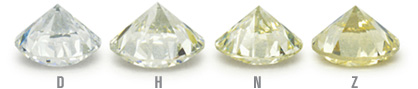
When we speak of a diamond's color, we are usually referring to the presence or absence of color in white diamonds. Diamonds are found in almost every color of the rainbow, but white-colored diamonds remain the most popular. Color is the result of the composition of the diamond, and it never changes over time.
Because a colorless diamond allows more light to pass through colorless diamonds emit more sparkle and fire. The Gemological Institute of America’s (GIA) professional color scale that begins with the highest rating of D for colorless and travels the alphabet to grade stones with traces of very faint or light yellowish or brownish color.


Many people confuse cut with the shape of a diamond. Cut refers to the angles and proportion of a diamond. Diamonds are cut with a full 58 facets. A precisely cut diamond with the appropriate proportion and angles is designed to give the maximum light reflection, refraction and sparkle.
Generally, there are seven principle diamond shapes for jewelry: Round, Marquise, Emerald, Princess, Pear, Oval and Heart. Side stone options include these seven shapes as well as Baguette and Trillion. The most popular shapes of diamonds are:

Clarity refers to the presence of flaws on the surface of the diamond or inside the diamond. The flaws inside the diamond are referred to as "Inclusions"; those on the surface are referred to as "Blemishes". The degree to which these flaws are present in a diamond affects the clarity grading of the gem. Clarity grading ranges from Flawless (completely free of flaws) to Included 3 (diamond with large, heavy blemishes and inclusions which are visible to the eye).

Carat is often confused with size even though it is actually a measure of weight. One carat is equivalent to 200 milligrams. One carat can also be divided into 100 "points". A .75 carat diamond is the same as a 75 point or 3/4 carat diamond.
What are Conflict Diamonds?
The often-cited definition of conflict diamonds is the United Nations definition: “Diamonds that originate from areas controlled by forces or factions opposed to legitimate and internationally recognized governments, and are used to fund military action in opposition to those governments, or in contravention of the decisions of the UN Security Council.”
E.A. Dion deals only with countries and suppliers actively complying with the standards of the United Nations Kimberley Process (www.KimberleyProcess.com) regulating the importing/exporting of government validated diamonds from a source free of conflict. You can read more about our commitment to conflict-free-diamonds by clicking here - Conflict-Free Diamonds.
Gold’s purity is measured in "karats". 24 Karat gold is pure gold, but its purity means it is more expensive and less durable than gold that is alloyed with other metals.
Karats Percent
(parts of gold per 24) (parts of gold per 100)
24 Karat 100 percent
18 Karat 75.0 percent
14 Karat 58.3 percent
10 Karat 41.6 percent
The weight of gold or gold articles is usually expressed in troy ounces and/or pennyweight (dwt)
1 Troy ounce = 1.097 ordinary ounce
1 Troy ounce = 20 pennyweight (dwt)
The "d" in the traditional symbol for pennyweight (dwt) is from the Latin denarius, the small Roman coin which was the equivalent of a penny.
Yellow Gold is alloyed with silver and copper. It is the most frequently used type of gold there is.
White Gold is alloyed with a large percentage of silver and is therefore more expensive than yellow gold. White gold is highly reflective and not subject to tarnish.
Rose Gold is alloyed with copper and silver.
Examples:
By U.S. law, every gold article must have a karat mark. In addition to the karat mark, every piece of gold jewelry should be stamped with a hallmark or trademark of the manufacturer.
Each part of the globe has very different expectations of what "gold" is.
United States 14karat/10karat
European Union 18karat/14karat
Mid-East 22karat/18karat
Far-East 22karat/18karat/14karat
10 karat gold in the U.S. is very common and an acceptable alloy. Other parts of the world do not recognize or accept jewelry marked 10K as precious.
Gold-plated jewelry has a thin layer of gold that has been applied to any base metal item by means of an electroplating (or dipping) process.
Gold-filled refers to stock material which is made by combining a layer of gold to a layer of base metal. The thickness of the gold layer will determine the percentage of gold by weight. It may be 5%, 10%, 15% or 20% gold.
Fine silver in its natural state, 999/1000 pure, is almost as soft as gold, too soft an element for practical jewelry. To make it workable, an alloy such as copper is added. The following are the more common silver alloys:
Sterling Silver - A mixture of 92.5% silver and 7.5% metal alloy Sometimes jewelry made of this metal mixture is marked .925, to indicate that the metal is at least 92.5% pure silver.
Mexican Silver - 90% - 99% pure silver
Coin Silver - 90% pure silver and 10% metal alloy
German Silver or Nickel Silver - A silver white alloy consisting of copper, zinc, and nickel
Vermeil - Sterling Silver electroplated with karat gold


